

Highways Specification Group - Current Cases
The Highways Laboratory has been used for over 60 years, has a national reputation and is one of the few that remain under the control of a local authority.
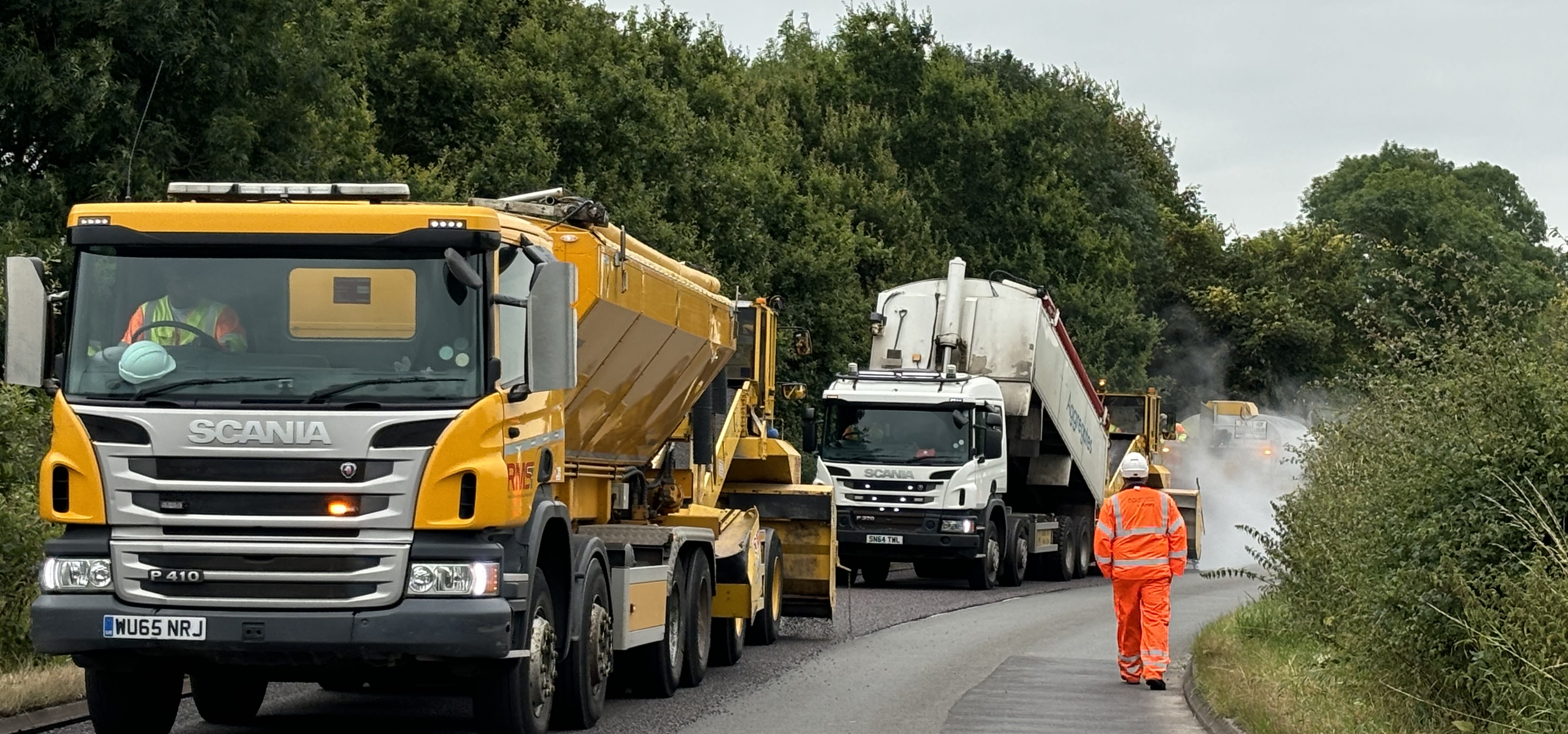
Proposed Schemes – Grouped by Project discipline
This page provides an overview of proposed highway specification schemes currently recorded in the system. Cases are grouped by project discipline to make it easier to browse related submissions and review activity by category.
Use the search box below to search by reference, project title, description, discipline or status. Search results will open in a popup, where you can either jump to the case within this page or open the full case timeline.
You can also expand a discipline section to browse all cases in that group. Clicking a reference number in the table will open the full case timeline for that submission.
Material or Product3 cases
| Reference | Project discipline | Project Title | Project Description | Submitted | Status |
|---|---|---|---|---|---|
| SGI000004 | Material or Product | Innovative Mastic Product | Revitamac is an innovative hot-applied asphalt repair material developed to provide local authorities with a versatile, durable and sustainable solution for highway maintenance. A key differentiator of Revitamac is that it has successfully completed the most extensive independent assessment programme available within the UK highways sector through the British Board of Agrément (BBA). The final approval documentation has been reviewed following the completion of the rigorous assessment process, which evaluated technical performance, durability, manufacturing quality controls and suitability for highways applications. Unlike conventional repair materials that are primarily intended for individual pothole repairs, Revitamac has been assessed for a significantly wider range of applications, including potholes, fretting, ravelling, utility reinstatements, larger patch repairs and full-width carriageway repairs. This wider approval scope enables local authorities to utilise a single repair solution across multiple maintenance activities, reducing product complexity and improving operational efficiency. The material delivers coverage of up to approximately 60m² per tonne, depending on repair depth and site conditions, providing a cost-effective solution for network maintenance. Its high-strength stone matrix creates a robust and stable repair capable of performing under varying traffic and weather conditions, helping authorities extend repair life and reduce repeat interventions. Revitamac has also demonstrated strong adhesion performance through independent testing on asphalt surfaces both with and without a tack coat. Testing confirmed satisfactory bond performance on suitably prepared asphalt surfaces without a tack coat, offering greater flexibility during installation and helping to improve productivity on site. Environmental sustainability is a core element of the innovation. Revitamac contains up to 90% recycled material and offers market-leading carbon credentials supported by independently verified third-party carbon data. Carbon reductions are achieved through high recycled content, efficient installation processes, reduced waste generation and fewer maintenance interventions throughout the asset life cycle, supporting local authority net-zero strategies and sustainable procurement objectives. The product has achieved a retained Skid Resistance Value (SRV) of 73, demonstrating excellent long-term skid resistance and contributing to road user safety. Furthermore, installers can achieve approved installer status through the Revitamac training programme, ensuring a competent workforce and consistent installation standards. Overall, Revitamac provides local authorities with an independently assessed, high-performance highway repair solution that combines broad application capability, operational efficiency, sustainability benefits and long-term asset performance. Its extensive BBA assessment scope, high recycled content and ability to address multiple defect types using a single material represent a significant advancement in highway maintenance practice. | 16/10/2026 14:38 | Case Created |
| SGI000003 | Material or Product | REFLECT-IT RX3 | REFLECT-IT RX3 is a new-generation passive retro-reflective road stud designed to deliver high optical performance while fundamentally reducing the physical and operational impact associated with conventional road stud systems. RX3 is independently tested and certified to EN 1463-1 and EN 1463-2, achieving the highest S1/R1 classification, and is the smallest road stud in the world to achieve S1/R1. Its compact design requires significantly less carriageway excavation than conventional road stud systems, reducing installation time, traffic management requirements, network disruption and workforce exposure. Combined with its long-life integral optical design and simplified approach to maintenance and renewal, RX3 delivers a significantly lower whole-life cost and whole-life carbon impact than traditional road stud systems. Unlike conventional systems which can require substantial excavation and repeated intervention throughout their service life, RX3 has been developed around a simpler principle: achieve the required road-user guidance performance while minimising the amount of infrastructure, material and intervention required to provide it. Bankswood Infrastructure Group is proposing RX3 for consideration for deployment on Staffordshire's highway network. Full independent certification and test data, technical specifications, installation methodology, our preliminary whole-life carbon assessment, and evidence from existing UK deployments can be provided to support the Highways Specification Group's evaluation. | 15/09/2026 13:37 | Case Created |
| SGI000002 | Material or Product | Light weight, low carbon kerbs | Proposed Innovation This proposal seeks to evaluate Durakerb, an innovative lightweight kerbing system, as a safer, more sustainable, and more efficient alternative to traditional concrete kerbs. The innovation focuses on addressing key challenges faced within highway maintenance and infrastructure projects, including manual handling risks, occupational health concerns, carbon reduction targets, installation efficiency, and disruption to road users. By replacing conventional concrete kerbing with a lightweight, recyclable alternative, the project aims to demonstrate how modern materials can improve workforce wellbeing, support environmental objectives, and deliver operational efficiencies without compromising performance or durability. What We Are Trying to Achieve The primary objective of this innovation is to validate whether Durakerb can deliver measurable improvements across three key areas: Health and Safety Reduce manual handling risks associated with installing heavy concrete kerbs. Minimise the potential for musculoskeletal injuries and operator fatigue. Eliminate exposure to silica dust by removing the need for on-site cutting activities. Create a safer working environment for installation teams and other site personnel. Environmental Sustainability Reduce embodied carbon compared with traditional concrete kerbing systems. Support organisational sustainability and net-zero commitments. Increase the use of recyclable materials within highway infrastructure projects. Reduce waste through a fully recyclable end-of-life solution. Operational Efficiency Improve installation productivity through a lighter, easier-to-handle product. Reduce programme durations and associated labour requirements. Minimise traffic management requirements and disruption to road users. Deliver cost and resource efficiencies through faster installation processes. Proposed Approach To assess the suitability and benefits of Durakerb, a structured trial and evaluation programme will be undertaken. Stage 1: Stakeholder Engagement and Planning Engage relevant project stakeholders to understand current kerbing practices, identify suitable trial locations, agree success measures, and establish baseline data for comparison. Stage 2: Product Demonstration Conduct a live demonstration of the Durakerb system, showcasing: Product handling and transportation. Installation techniques. Comparison with traditional concrete kerbs. Health and safety improvements. Expected productivity and environmental benefits. Stage 3: Site Trial and Installation Install Durakerb within a live highway environment alongside, or in comparison to, traditional kerbing solutions. Performance indicators will include: Installation duration. Labour resource requirements. Manual handling impacts. Traffic management implications. Overall productivity and operational efficiency. Stage 4: Monitoring and Evaluation Collect feedback from site operatives, supervisors, project managers, and health and safety representatives. Trial outcomes will be assessed against agreed objectives and performance measures. Stage 5: Benefits Assessment and Recommendations Produce a final evaluation report summarising: Health and safety improvements. Carbon reduction benefits. Installation efficiency gains. Operational performance outcomes. Recommendations for wider adoption across future schemes. Expected Outcomes The innovation is expected to demonstrate: Reduced manual handling and occupational health risks. Elimination of silica dust generation during installation. Significant carbon savings compared with concrete kerbing. Faster installation and reduced project delivery times. Improved productivity and resource utilisation. Reduced disruption to the travelling public. Increased use of sustainable and recyclable materials. A scalable solution that can support future highway maintenance and infrastructure projects. Summary This innovation will provide evidence of how Durakerb can transform traditional kerb installation by delivering safer working practices, lower environmental impact, and greater operational efficiency. Through a controlled trial and evaluation programme, stakeholders will be able to directly compare the system against conventional concrete kerbs and determine its suitability for wider deployment across highway maintenance and improvement schemes. | 15/09/2026 10:37 | Proposal declined |
Design0 cases
Software1 case
| Reference | Project discipline | Project Title | Project Description | Submitted | Status |
|---|---|---|---|---|---|
| SGI000001 | Software | Initial Test Case | Initial Test of detailed description of the proposed innovation | 03/06/2026 13:11 | Proposal declined at follow up stage |